

The Question Worth Asking
We spend so much of our lives consumed by the question of who or what we love. We chase romantic love, we obsess over friendships, we pour affection into things that glitter and fade. But there is a far more important question we rarely stop to ask: who truly loves us the most in this world? And who is most deserving of our love in return?
The answer, across traditions and across centuries, points in one direction: your mother.
A Love Beyond Definition
Most love is conditional. We love people when they are kind to us, when they meet our expectations, when they appear perfect. But the moment flaws surface, the moment inconvenience arrives, that love begins to waver. Human beings are imperfect by nature, and when we begin to see the real person behind the image we constructed, our feelings shift.
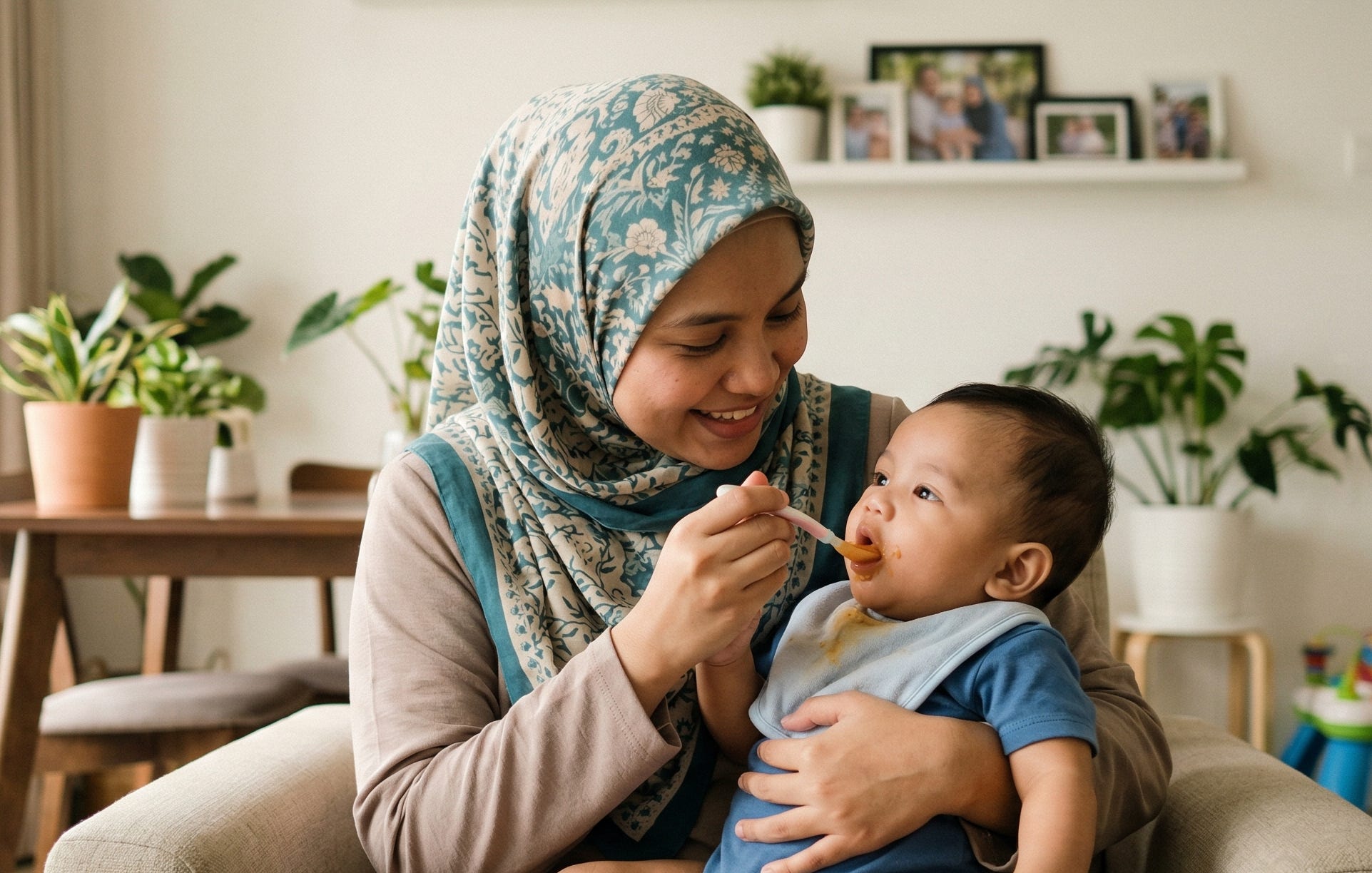
A mother’s love operates on an entirely different plane. It does not depend on performance. It does not expire. It is not transactional. A mother loves the child who succeeds and the child who fails. She loves the child who calls every day and the child who has not called in months. Her love is closer to mercy than it is to affection, because mercy is what allows someone to forgive without being asked, to give without expecting return, and to endure without complaint.
The Islamic Imperative
Islam does not merely suggest kindness toward mothers. It commands it, and elevates the status of a mother to a rank that sits just below the worship of Allah Himself. In the Quran, Allah says:
“We have commanded people to honour their parents. Their mothers bore them in hardship and delivered them in hardship. Their period of bearing and weaning is thirty months.” (Quran, Surah Al-Ahqaf, 46:15)
Notice the emphasis. Allah does not simply say parents. He draws attention specifically to the mother’s sacrifice: the hardship of carrying a child, the pain of delivery, and the long months of nursing and weaning. These are burdens that no one else bears.
When a man came to the Prophet Muhammad (peace be upon him) and asked who among people was most deserving of his good companionship, the Prophet’s answer was striking in its repetition:
“Your mother.” The man asked, “Then who?” He said, “Your mother.” The man asked again, “Then who?” He said, “Your mother.” The man asked once more, “Then who?” He said, “Your father.”
(Sahih al-Bukhari 5971, Sahih Muslim 2548)
Three times the Prophet named the mother before even mentioning the father. This is not poetic repetition. It is a deliberate instruction, establishing a clear order of priority in how we distribute our kindness and attention.
Mercy as the Bridge
The Prophet (peace be upon him) once drew a powerful comparison between a mother’s love and Allah’s mercy. When prisoners of war were brought before him, a nursing woman among the captives was desperately searching for her child. When she found a baby, she clutched it to her chest and began nursing it. The Prophet turned to his companions and asked: “Do you think this woman would throw her child into the fire?” They said, “No, not if she could prevent it.” The Prophet then said:
“Allah is more merciful to His servants than this mother is to her child.” (Sahih al-Bukhari 5999, Sahih Muslim 2754)
Think about this for a moment. A mother’s love, fierce and instinctive, willing to shield her child from fire, is being used as the baseline to help us understand divine mercy. And yet, Allah’s mercy surpasses even that. If a mother’s love is the most powerful force we can witness on earth, then Allah’s mercy is something beyond our comprehension entirely.
The Stoic Mirror
This understanding of a mother’s role is not exclusive to Islam. Across the ancient world, wise men recognised that a mother shapes the very foundation of a person’s character. Marcus Aurelius, the Roman Emperor and Stoic philosopher, opens his Meditations by listing the people who formed him. His mother, Domitia Calvilla, receives one of the most significant acknowledgments:
“From my mother: piety and beneficence, and abstinence, not only from evil deeds, but even from evil thoughts; and further, simplicity in my way of living, far removed from the habits of the rich.” (Meditations, 1.3)
Consider what Marcus credits to his mother: not military strategy, not political skill, but something far deeper. Piety. Generosity. The avoidance of evil, not only in action but in thought. Simplicity. These are the qualities that form the bedrock of character, and he traced every one of them back to her.
Whether through the lens of Islam or through the lens of Stoicism, the conclusion is the same: a mother does not simply raise a child. She shapes a soul. The values she lives by become the values her children carry into the world. A mother who honors her own parents teaches her children to do the same. A mother who is careless with these bonds teaches a different lesson entirely.
The Drift We Must Guard Against
We live in a time where the bond between parent and child is under quiet but persistent strain. The pattern is familiar. We grow up, we marry, we build our own families. Our focus shifts to our children, our careers, our ambitions. Slowly, gradually, the woman who gave everything begins to occupy a smaller and smaller space in our daily lives.
A mother, however, never makes that shift. Her concern for her children does not diminish when they leave home. It does not stop when they get married. It does not end when she grows old. She will worry about you until her last breath.
Yet we see increasingly that adult children reduce contact with their parents. Sometimes the distance is physical, sometimes emotional. Often it is a spouse who, intentionally or not, creates a wedge. A good spouse recognizes the sacred nature of this relationship and nurtures it. A spouse who pulls their partner away from their mother for their own comfort or control reveals something about their own character. Someone who severs the bond between a parent and child for selfish reasons is often the same person driven by material concerns and social image, and those things, by their very nature, are impermanent.
Your mother will always be there. Waiting.
Small Gestures, Lasting Memories
Many of us try to compensate for neglect with grand gestures. We buy expensive gifts. We plan elaborate celebrations on a single designated day in the calendar. But a mother is not looking for material things. She never was.
What she wants is your time. An evening walk together. Cooking a meal side by side. Sitting with her while she tells you a story you have heard before. Playing a board game on a quiet afternoon. Working on something small together. These are the moments that become memories, and these memories are what both of you will carry.
There is no need to wait for a holiday manufactured by marketers to remind you to honor the person who has honored you every day of your life. The Stoics called this memento mori, the reminder that life is finite. Our time with the people we love is limited. We can assign a monetary value to an extra year of work, an extra degree, an extra promotion. But we cannot put a price on time spent with our mother. It is irreplaceable.
She is the most deserving of your kindness. What good is your money, your title, your standing in society, if you are not close to the one person who loved you before you had any of it?
A Final Reflection
If a mother’s heart holds that much mercy for her child, and Allah’s mercy is greater still, then we are held in a compassion far beyond our ability to grasp. This raises a question worth sitting with: if such mercy exists, why does the world still hold so much suffering?
That is a question for another time. For now, the task is simpler and more urgent. Make time for your mother. Call her. Visit her. Sit with her. She is the most deserving of your good companionship, and the window to do so will not remain open forever.
References
Quran, Surah Al-Ahqaf (46:15)
Sahih al-Bukhari, Hadith 5971 (Kitab al-Adab); Sahih Muslim, Hadith 2548 (Kitab al-Birr)
Sahih al-Bukhari, Hadith 5999; Sahih Muslim, Hadith 2754
Marcus Aurelius, Meditations, Book 1.3 (George Long translation)